Introduction
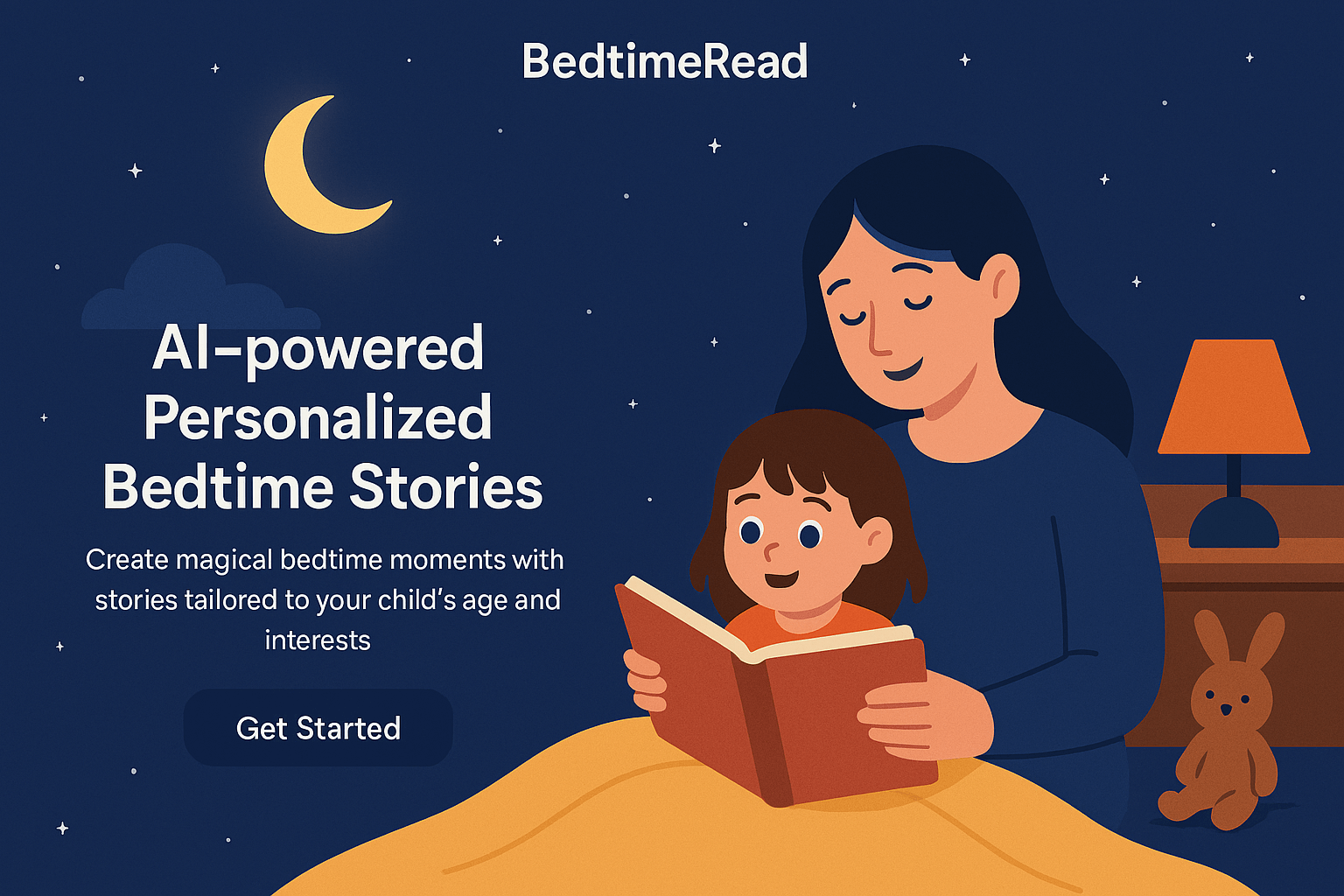
Every parent knows the struggle: it's bedtime, and your child asks for "just one more story"—a request that can repeat endlessly, leaving parents exhausted and searching for creative tales at 8 PM. BedtimeRead addresses this universal challenge by leveraging artificial intelligence to generate personalized, unlimited bedtime stories where your child becomes the hero of their own adventure.
Founded by a parent who understands this pain point firsthand, BedtimeRead represents a growing intersection of wellness technology, AI innovation, and the creator economy. In an era where parents are increasingly conscious about screen time while also seeking solutions for better sleep routines, this startup offers a compelling alternative that harnesses generative AI for genuine parental benefit.
For founders and entrepreneurs looking to build in the health-tech space, BedtimeRead demonstrates how to identify a real problem, validate it through personal experience, and scale a solution that resonates with a massive, underserved market.
The Problem: Parents Need More Than Generic Stories
The modern parenting challenge goes beyond simply lacking bedtime stories. Multiple pain points intersect in the bedtime routine:
- Creativity fatigue: Parents exhaust their storytelling repertoire within weeks, leading to repetition and reduced engagement from children.
- Screen time concerns: While tablets and phones can play audiobooks or videos, many parents worry about blue light exposure before sleep.
- Personalization gap: Generic stories don't capture children's unique interests, imagination, or desire to see themselves in narratives.
- Time constraints: Busy parents need solutions that work on demand, without extensive preparation.
- Quality expectations: Parents want stories that are not just filler content but genuinely engaging and age-appropriate narratives.
Traditional sleep apps like Calm, Headspace, and Slumber offer curated story libraries read by professional narrators—a valuable service, but one that lacks personalization. They offer breadth but not the deep customization that makes a story truly resonate with an individual child.
The Solution: AI-Powered Personalized Story Generation
BedtimeRead solves this by combining generative AI with a simple, user-friendly interface. Here's how the product works:
- Customization: Parents input their child's name, interests, favorite characters, or specific themes they'd like included in the story.
- AI Generation: The platform uses advanced language models to create unique, tailored bedtime stories in minutes.
- Voice Narration: Stories are converted to high-quality audio narration, creating a professional listening experience without screen interaction.
- Unlimited Content: Parents never run out of fresh stories—new narratives can be generated instantly, each time personalized differently.
- Quality Assurance: Similar to how companies like Loftie manage AI-generated stories, BedtimeRead ensures stories are reviewed for appropriateness and quality before delivery.
This approach directly addresses the parent pain point: unlimited, personalized, on-demand content that keeps children engaged while promoting better sleep. Unlike generic story apps, BedtimeRead makes each child the protagonist of their own narrative—a powerful psychological driver for engagement and emotional investment.
Why This Startup Matters: The Intersection of Wellness, Tech, and Parenting
BedtimeRead operates at a fascinating convergence of three major market trends:
1. The Sleep Economy Is Booming
Quality sleep has become a health priority. Companies like Loftie have found strong market validation for sleep-focused hardware and content, securing $3 million in funding. The broader sleep app market includes established players like Calm, which charges $70 annually, demonstrating consumer willingness to pay for sleep solutions. BedtimeRead taps into this same opportunity but with a focus on children and families.
2. AI as a Content Multiplier
Generative AI has democratized content creation. What previously required teams of writers and voice actors can now be produced on-demand by AI systems. This enables BedtimeRead to offer unlimited personalization at scale—something that would be economically impossible with human creators alone. For founders, this demonstrates the power of using AI not as a gimmick but as a genuine efficiency multiplier that improves unit economics.
3. Parents Are the Fastest-Growing Consumer Tech Segment
Parenting-focused apps and services represent one of the fastest-growing categories in consumer tech. From education platforms to wellness apps, parents are actively seeking solutions that improve their family's quality of life. BedtimeRead targets a specific, high-intent segment: parents who already recognize the value of bedtime routines and are willing to pay for solutions that enhance them.
The Business Model: Monetizing a Universal Need
BedtimeRead employs a SaaS (Software-as-a-Service) model with multiple monetization opportunities:
- Freemium Tier: Free access to basic story generation with limited personalization, creating user adoption and demonstrating value.
- Premium Subscription: Monthly or annual plans unlocking unlimited personalization, advanced customization options, and potentially additional features like story history or parental insights.
- Family Plans: Pricing for households with multiple children, encouraging higher lifetime value per customer.
- Enterprise/Daycare Integration: Licensing to preschools, daycares, and educational institutions seeking bedtime solutions for group settings.
The unit economics are compelling: AI-generated content has minimal marginal cost, so each additional subscriber represents nearly pure contribution margin. This is the hallmark of successful software businesses—once the platform is built and the AI model is trained, scaling is capital-efficient.
Lessons for Founders: What BedtimeRead Teaches About Startup Success
1. Start with a Real Problem You Understand Deeply
BedtimeRead's founder created the product out of personal frustration with endless story requests from their daughter. This kind of firsthand problem identification is far more valuable than chasing market trends. When you understand a problem viscerally, you're better equipped to build a solution that truly resonates.
2. Identify When Technology Can Genuinely Improve an Experience
Not every problem needs AI, but some do. The bedtime story problem is genuinely solved by generative AI—it creates personalization at scale. Smart founders recognize which technologies solve which problems, rather than forcing technology into every situation.
3. Focus on Defensible Differentiation
While large companies like Amazon or Apple could theoretically build similar products, BedtimeRead's focus on personalized bedtime stories creates a defensible niche. The founder has product-market fit evidence and early traction. Competitors would need to match not just the technology but the focused execution and understanding of the parenting market.
4. The Sleep and Wellness Category Is Still Wide Open
Despite companies like Calm, Headspace, and Loftie, the sleep and wellness market has room for vertical-specific solutions. BedtimeRead's focus on children and personalization differentiates it from horizontal sleep platforms. This teaches founders that even in crowded categories, focused sub-segments can build substantial businesses.
Challenges and Opportunities Ahead
Challenges
- Competition from larger platforms: Calm or Headspace could add AI-generated story features, leveraging their existing user bases.
- Content quality consistency: Ensuring AI-generated stories remain consistently high-quality is an ongoing challenge requiring robust quality assurance.
- Building brand trust: New parents may be skeptical of AI-generated stories, requiring effective marketing and social proof.
Opportunities
- International expansion: The product works in any language where generative AI models exist, enabling rapid global scaling.
- Partnerships with parenting platforms: Integration with apps like BabyCenter or Pampers could drive acquisition and provide credibility.
- Licensed characters: Partnerships with Disney, Pixar, or children's publishers could create branded story templates, driving premium pricing.
- Therapeutic applications: Stories could be customized for specific developmental or educational purposes, opening B2B opportunities with educators and child psychologists.
Conclusion
BedtimeRead exemplifies how thoughtful founders can use modern technology to solve genuine, universal problems. By combining generative AI with deep understanding of parental needs, the startup addresses a real gap in the market—one that larger, more generalist competitors haven't fully exploited.
For parents, BedtimeRead promises smoother bedtimes and more engaged children. For founders, it demonstrates the power of focused execution, clear problem identification, and strategic use of AI technology to build defensible, scalable businesses in underexplored niches within massive markets.
The sleep and wellness category will continue to grow, and personalization will become increasingly expected. BedtimeRead is well-positioned to capture meaningful value in this expanding opportunity.
Ready to turn your startup idea into reality? Share your concept on StartupIdeasAI.com to connect with investors, collaborators, and fellow innovators who are ready to help you build the future.