Introduction
In the rapidly evolving landscape of digital content creation, the bottleneck has long been the transition from concept to three-dimensional reality. Traditionally, creating 3D assets required specialized technical knowledge, expensive software, and hours of manual labor. Image-to-3D.ai is changing this narrative by leveraging sophisticated generative AI to bridge the gap between 2D imagery and 3D modeling. By allowing users to generate high-quality assets from a single reference image, the platform is democratizing 3D design for founders, creators, and enterprise teams alike.
What This Startup Does
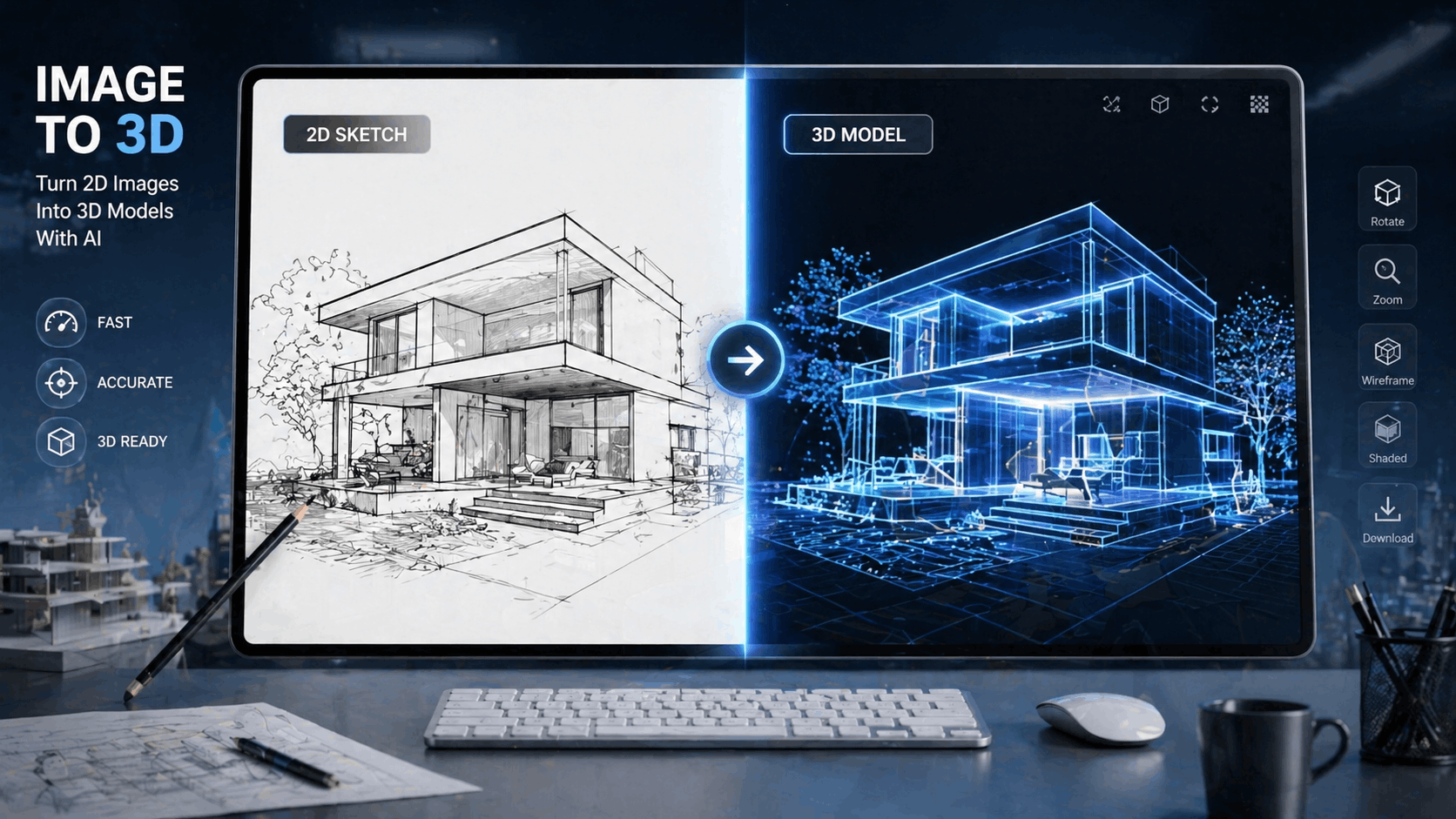
Image-to-3D.ai provides an intuitive, web-based interface where users can upload any 2D image—whether it is a photograph, a hand-drawn sketch, or AI-generated concept art—and receive a fully textured 3D model in return. The platform utilizes advanced neural networks to infer depth, geometry, and material properties from flat pixels, effectively automating the most tedious stages of the 3D modeling workflow. It is designed to be a "one-click" solution that eliminates the steep learning curve typically associated with CAD software.
Key Features and Capabilities
- Instant Geometry Generation: Converts 2D silhouettes into accurate 3D meshes with clean topology.
- Automatic Texturing: Extracts color and material data from the source image to wrap the 3D model in realistic textures.
- Multiple Export Formats: Supports industry-standard files such as .OBJ, .GLB, and .STL, ensuring compatibility with Blender, Unity, Unreal Engine, and 3D printers.
- Sketch-to-Model Workflow: Specifically optimized to recognize line art and rough drafts, making it a powerful tool for early-stage conceptualization.
- Cloud-Based Processing: Handles heavy computational tasks on the server side, allowing users to generate models on any device without high-end hardware.
Use Cases and Practical Applications
The versatility of Image-to-3D.ai makes it a vital asset across several high-growth industries:
Game Development: Indie developers can rapidly prototype environment props and character silhouettes, significantly reducing the time spent in the "gray-boxing" phase of production.
E-commerce and Retail: Brands can convert product photography into interactive 3D viewers for their websites, enhancing the customer shopping experience through augmented reality (AR) previews.
Rapid Prototyping: Industrial designers and makers can take a quick photo of a physical object or a sketch and generate a 3D file ready for 3D printing or further refinement in engineering software.
Why This Startup Stands Out
What sets Image-to-3D.ai apart is its commitment to speed and accessibility without sacrificing the integrity of the output. While other tools require multiple viewpoints (photogrammetry), this platform's strength lies in its "single-view" inference capability. It moves the industry away from manual vertex manipulation and toward a future of "prompt-based" or "reference-based" asset creation. For startups looking to scale their visual content production, this tool represents a strategic advantage by lowering both the cost and time-to-market for 3D-integrated projects.
Frequently Asked Questions
What kind of images work best for conversion?
High-resolution images with clear lighting and a distinct subject against a simple background yield the best results. The AI performs most accurately when the object's boundaries are well-defined.
Do I need 3D modeling experience to use the platform?
No. The platform is built for accessibility, requiring only an image upload to generate a model. However, the exported files can be further refined by professional artists in software like Blender or Maya.
Are the generated models compatible with game engines?
Yes, the exported .GLB and .OBJ files are standard formats compatible with all major engines including Unity and Unreal Engine.
Can I use the models for 3D printing?
Yes, by exporting to the .STL format, the generated geometry can be brought into slicing software for 3D printing, though some manual mesh closing may be required for complex shapes.
Conclusion
Image-to-3D.ai is positioned at the intersection of generative AI and spatial computing. By removing the technical barriers to 3D creation, it enables a new wave of creators to build immersive worlds and products with unprecedented speed. As the demand for 3D content grows in the metaverse, gaming, and digital commerce, platforms like Image-to-3D.ai will become the standard foundation for the modern creative stack.
Share your startup idea on StartupIdeasAI.com to get discovered by founders, investors, and innovators.