Introduction
We are witnessing the "App Store" moment for artificial intelligence, but with a twist: it isn't happening in a walled garden. It's happening in the terminal.
As developers rush to build autonomous agents—AI that can do things, not just say things—they have hit a bottleneck. Large Language Models (LLMs) provide the reasoning, but they lack the tools to interact with the world. Building these integrations from scratch for every agent is inefficient.
Enter ClawHub. Positioned as the "npm for AI agents," ClawHub is the decentralized registry for the OpenClaw (formerly Clawdbot and Moltbot) ecosystem. It allows developers to publish, discover, and install "AgentSkills" with a single command, effectively giving local AI agents the ability to use generic software tools. It is a glimpse into a future where software is composable, autonomous, and open.
What Is ClawHub?
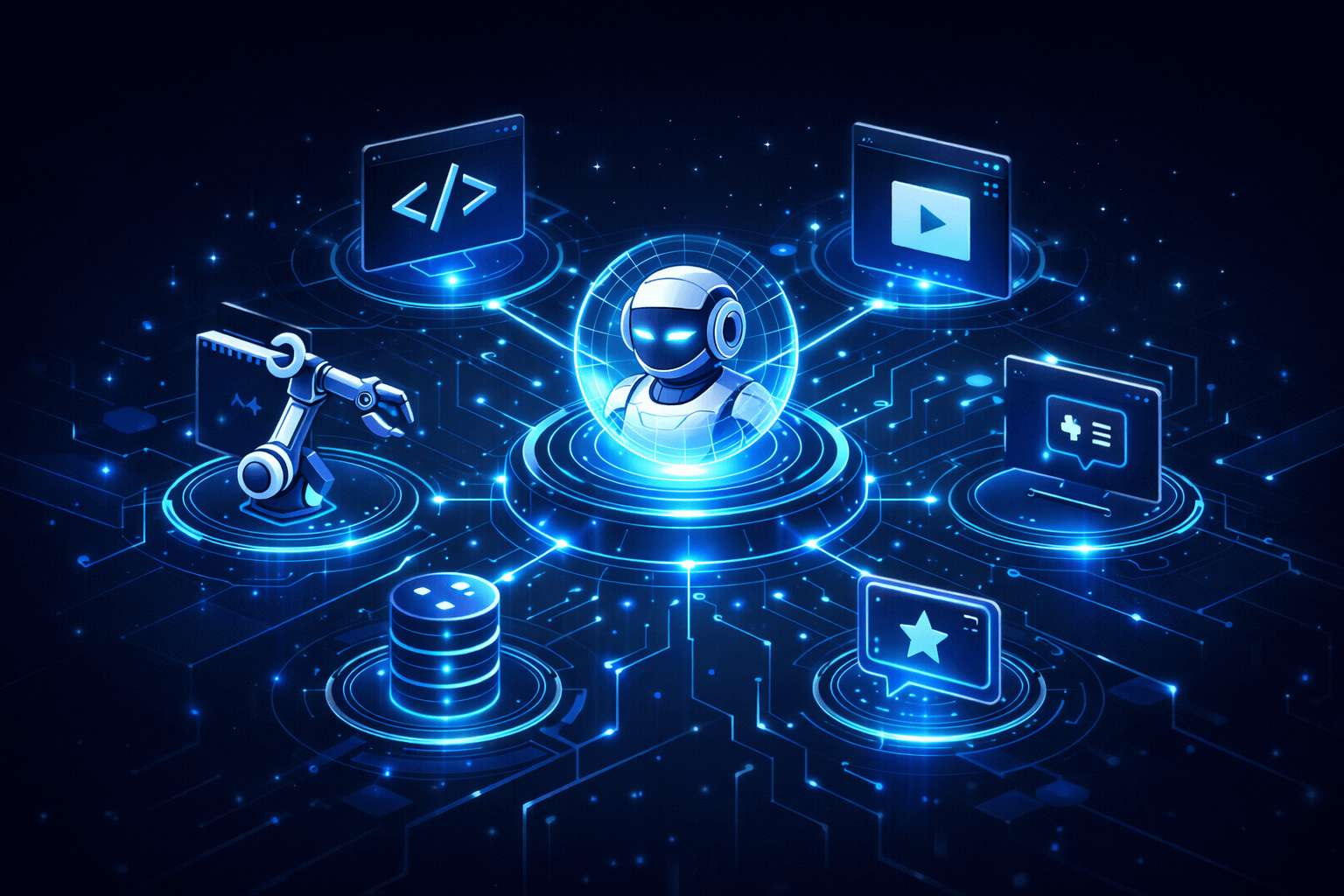
ClawHub is the central distribution node for AgentSkills—modular bundles of code and instructions that grant AI agents specific abilities. Just as a web developer uses npm to pull in a library like React, an AI engineer uses ClawHub to pull in a skill like "GitHub Manager" or "Spotify Controller."
The platform solves the discovery problem for autonomous agents. Instead of hard-coding tools, an agent can query ClawHub to find the right tool for a specific task, install it, and execute it locally. This architecture decouples the "brain" (the LLM) from the "hands" (the tools), making agent capabilities portable and version-controlled.
The OpenClaw Ecosystem: A Brief History
To understand ClawHub, you must understand the chaotic, fast-moving ecosystem it serves. The underlying agent framework, now known as OpenClaw, was created by Peter Steinberger (founder of PSPDFKit). It has undergone a rapid evolution—and several rebrands—in just a few months:
- Clawdbot: The original release. A local-first agent designed to run on Mac Minis and servers.
- Moltbot: A temporary rebrand following trademark concerns from Anthropic (makers of the "Claude" model).
- OpenClaw: The current, stabilized identity for the open-source framework.
ClawHub acts as the utility layer for this ecosystem. Whether you are running a "Clawdbot" or "OpenClaw" instance, ClawHub is where you go to get your tools.
Technical Deep Dive: How a "Skill" Works
ClawHub brings software engineering rigor to the often messy world of AI scripting. It treats skills not as vague prompts, but as structured software packages.
The Anatomy of a Skill
A skill on ClawHub is typically defined by a SKILL.md file, following the "AgentSkills" open standard. This file contains:
- Metadata: Name, version, and description.
- Interface Definition: Clear instructions on how the AI should call the tool (e.g., arguments, flags).
- Execution Logic: The actual script (Python, Node.js, or Bash) that performs the action.
Vector-Powered Discovery
Traditional keyword search fails with AI. If an agent wants to "check the server status," searching for "Ping" might work, but searching for "System Health" might fail. ClawHub utilizes vector search (embeddings) to match agent intent with skill functionality. This allows agents to semantically "understand" what tools are available, even if the keywords don't match perfectly.
Security: The "Wild West" of Local AI
ClawHub operates on a "no gatekeeping" philosophy, similar to the early days of the internet. While this fosters incredible innovation, it introduces significant risks that founders and enterprise users must navigate.
Because OpenClaw agents run locally on your machine, installing a malicious skill is equivalent to running malicious code in your terminal. There have been documented instances of "crypto trading skills" on the registry that were actually malware designed to steal private keys.
Best Practices for Teams:
- Sandbox Everything: Never run OpenClaw or ClawHub skills on a production machine with sensitive access keys unless heavily sandboxed (e.g., via Docker).
- Audit the Code: Since skills are open source, teams should review the
SKILL.mdand associated scripts before installation. - Use Trusted Publishers: Look for skills maintained by recognized developers or the official OpenClaw team.
Why This Startup Matters
ClawHub is significant because it represents the unbundling of the AI stack. Companies like OpenAI are trying to build vertical integration—owning the model, the interface, and the "store" (GPT Store). ClawHub is betting on a horizontal, decentralized future.
By building independent infrastructure, ClawHub ensures that your agent's skills are not locked into one model provider. You can switch your agent's brain from GPT-4 to Claude 3.5 to Llama 3, and thanks to ClawHub, it will still know how to use its tools. For founders building durable AI applications, this interoperability is a massive strategic advantage.
Conclusion
ClawHub is more than a registry; it is the supply chain for the agentic economy. While currently rough around the edges—and requiring a "security-first" mindset—it is arguably the most exciting infrastructure project in the local AI space. It gives us a preview of a future where personal AIs are as customizable as Linux distributions, assembled piece-by-piece from a global library of community-built skills.
Share your startup idea on StartupIdeasAI.com to get discovered by founders, investors, and innovators.