Introduction
Imagine sending a WhatsApp message to your own AI assistant saying, “Book my next flight to San Francisco” — and within seconds, it checks your email, finds your preferred airline, and confirms the ticket. This is the experience that OpenClaw is building: a powerful, open-source personal AI assistant that lives on your own device and performs tasks autonomously.
OpenClaw emerged as a breakout project in 2025, driven by developers who believed AI assistants should do more than chat — they should act. Today, in 2026, it has grown into one of the most dynamic open-source ecosystems in the personal AI space, attracting startups, indie hackers, and enterprise experimenters alike.
Why OpenClaw Matters
For years, the AI assistant market was dominated by cloud-based tools — convenient but often limited and privacy-compromised. OpenClaw flips that model. It runs locally, giving users total control of data and direct access to their systems. That means your assistant can run shell commands, manipulate files, send messages, or control browser sessions — all securely from your own machine.
This combination of autonomy and local privacy represents a major shift in human-AI collaboration. As AI becomes an everyday productivity layer, OpenClaw’s model could become the blueprint for decentralized, privacy-preserving automation.
Main Insights
- Truly Autonomous Operations: OpenClaw is not just a chatbot — it’s an agent capable of taking direct action. Whether you ask it to sort files, scrape data, or schedule meetings, it executes with minimal oversight.
- Local-First Architecture: All computation runs locally, ensuring private information never leaves your system. This architecture also enables offline functionality and lower latency.
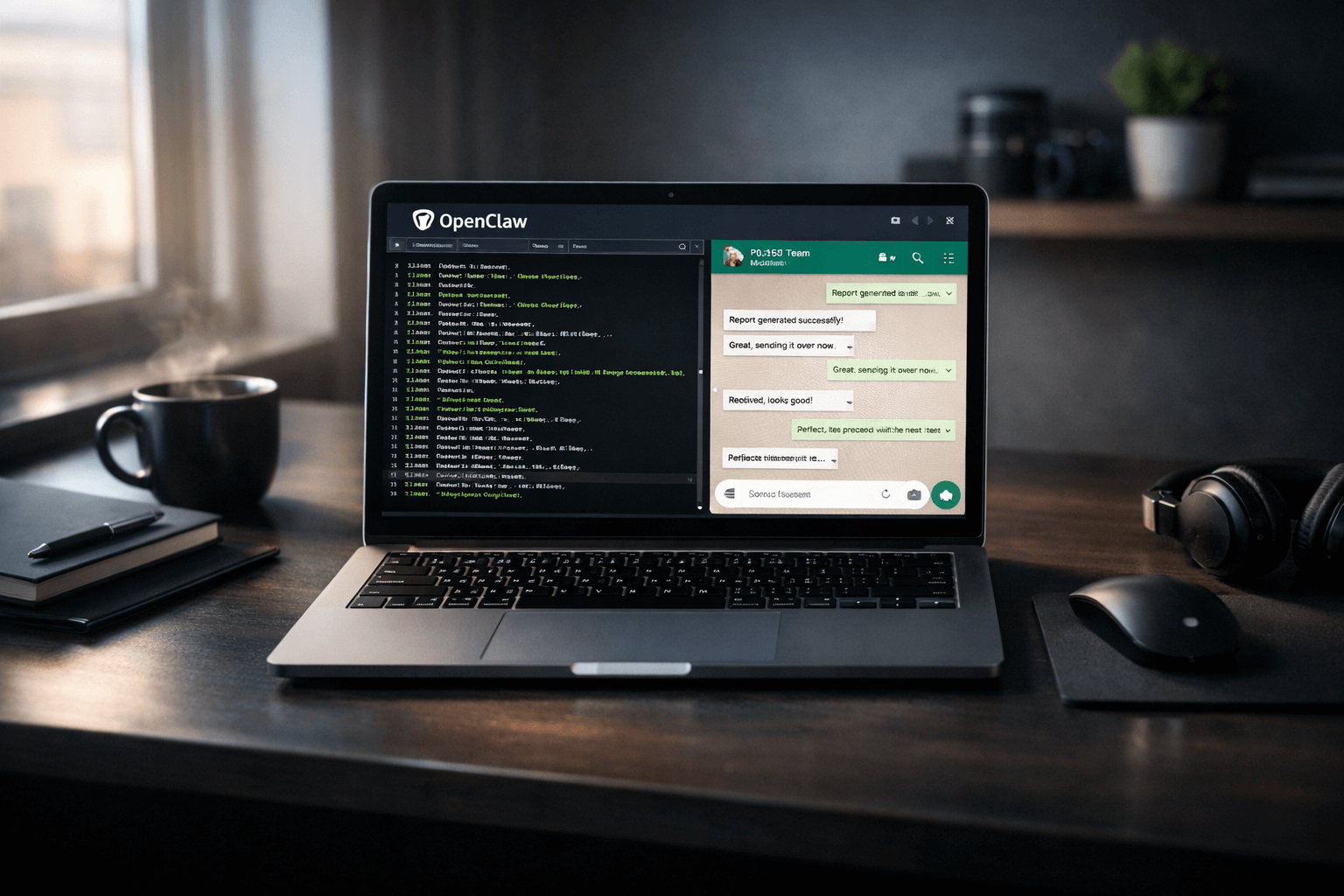
- Messaging Integration: OpenClaw connects with WhatsApp, Telegram, Signal, and even Slack. Users can interact naturally via chat to trigger automations, without needing complex dashboards.
- Community-Driven Extensibility: Because the project is open source (MIT license), developers around the world contribute “skills” — modular extensions that give OpenClaw new capabilities.
- Cross-Platform Performance: Compatible with macOS, Windows, and Linux, it scales from personal laptops to enterprise homelabs and cloud VMs.
- Rapid Adoption Curve: In 2025–2026, OpenClaw became one of the fastest-starred projects on GitHub in its category, amassing a vibrant community of builders.
- Security Conscious Design: With great power comes great responsibility. The team provides strong documentation, sandboxed environments, and permission controls for safe automation.
Inside the Technology
At its core, OpenClaw operates as an orchestration layer for language models, plugins, and APIs. It uses lightweight containerized runtimes to execute commands safely. Its modular structure means developers can plug in models like OpenAI’s GPT-4, Ollama’s local LLMs, or open-weight alternatives like Mistral.
The assistant also integrates with third-party APIs (e.g., Gmail, Google Calendar, Notion, and Slack) through OAuth-based connectors. These can be activated or restricted depending on user preference — putting users fully in control of what their AI can do.
How It Works
- The user sends a command via chat (e.g., “summarize this document and email it”).
- OpenClaw interprets the message using an LLM, maps intent to a workflow, and confirms execution permissions.
- The assistant runs the workflow locally — using scripts, APIs, or browser automation — and reports the result back to the user.
This makes OpenClaw feel more like a capable human assistant than a passive AI model. It listens, acts, and learns contextually.
Real-World Use Cases
The community has surfaced a wide range of creative use cases:
- Email & Calendar Management: Automatically clean newsletters, reschedule meetings, or respond to invitations using your preferred tone.
- Research Assistance: Scrape websites, summarize documents, and organize notes into structured reports.
- Content Automation: Generate daily blog drafts, product updates, or social media posts integrated with Markdown and CMS platforms.
- System Monitoring: For technical users, OpenClaw can monitor CPU load, server uptime, or application logs and alert you via chat.
- Startup Workflows: Founders use it to generate pitch decks, track fundraising updates, and even interface with CRM tools like HubSpot.
Examples / Ideas
A founder might message OpenClaw: “Pull all recent investor emails, summarize their replies, and update my CRM.” In minutes, the AI extracts messages, summarizes key notes, and syncs them to a Notion or Airtable database.
Another example: a freelancer can say, “List all unpaid invoices and send gentle reminders,” and OpenClaw handles the workflow via email templates. It’s automation at conversational speed.
In more experimental circles, developers are connecting multiple OpenClaw agents to collaborate — one managing data pipelines, another handling communication, and a third acting as a “reviewer” bot to ensure accuracy. This kind of agent-to-agent collaboration hints at a coming era of distributed AI labor.
Security and Ethics Considerations
Because OpenClaw runs commands and accesses private data, security is a top priority. The community recommends using isolated environments, strict permission prompts, and API key management tools. The project has also inspired open discussions about ethical guardrails — ensuring AI agents act only within the user’s explicit consent.
According to several cybersecurity analysts, personal AI agents like OpenClaw could reshape how individuals manage privacy online — but they also require users to become more technically literate about automation risks.
Impact on the Future of Work
The rise of OpenClaw signals a broader transformation in how people interact with technology. Instead of switching between dozens of apps, users can communicate naturally through a single chat interface that handles tasks end-to-end.
For startups, this means leaner operations. A single founder can deploy an OpenClaw instance to automate marketing, research, and customer support. Early-stage teams are using it as a “virtual operations layer” that scales without hiring more staff.
As the AI agent ecosystem matures, we may see new marketplaces emerge — where users share workflows, agents, and integrations much like mobile apps today.
Community & Ecosystem
OpenClaw’s success owes much to its open-source culture. The GitHub community continuously develops new modules — from web scrapers and document parsers to creative automation workflows. Regular hackathons and Discord sessions keep development fast and transparent.
Notably, the project’s founders have emphasized that OpenClaw is not just software — it’s a movement toward “owning your own AI.” That philosophy resonates strongly with privacy advocates and indie developers who want freedom from proprietary black-box platforms.
Conclusion
OpenClaw is more than an assistant — it’s a signal of the next evolution in human-AI interaction. By combining open-source transparency, local execution, and real-world action, it empowers users to build, automate, and collaborate with AI in ways that feel natural and safe.
Whether you’re a startup founder, researcher, or creative professional, OpenClaw shows what’s possible when AI tools prioritize user control and extensibility. The age of chatbots is ending; the age of autonomous AI partners is just beginning.
Share your startup idea on StartupIdeasAI.com to get discovered by investors and innovators.