Introduction
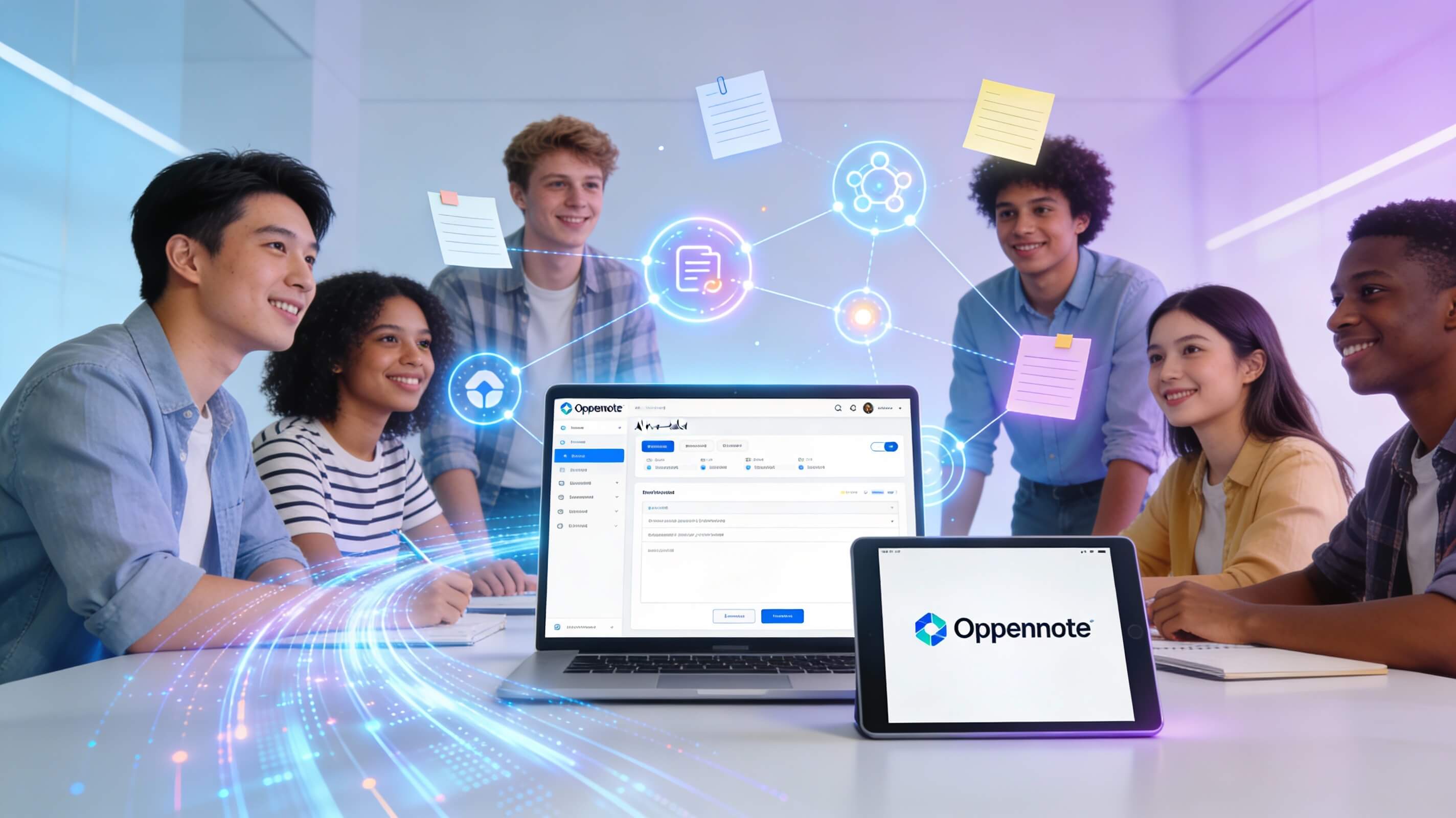
In an era where students juggle multiple tabs, scattered documents, and fragmented learning tools, Opennote emerges as a unified solution that's reshaping how the next generation learns and collaborates. Founded on the principle that students shouldn't have to switch between five different apps to manage their academic lives, Opennote brings together note-taking, AI-powered insights, real-time collaboration, and knowledge organization into a single, intelligent workspace.
According to recent market analysis, the global note-taking app market is projected to reach $12 billion by 2033, with AI-powered note-taking apps growing at a compound annual growth rate (CAGR) of 18.9%. Opennote is positioned at the forefront of this transformation, offering features that directly address the pain points modern students face: information overload, fragmented workflows, and the struggle to synthesize knowledge across multiple sources.
This blog explores what makes Opennote a game-changer for students, how its AI capabilities enhance learning outcomes, and why it matters for the future of education and productivity.
The Problem: Why Students Need a Better Way to Learn
Today's students face unprecedented challenges in managing their learning:
- Tool Fragmentation: Notes scattered across Google Docs, OneNote, Notion, and email—making it impossible to find information when needed.
- Information Overload: Drowning in lecture notes, readings, videos, and assignments without a cohesive way to organize and connect ideas.
- Passive Learning: Traditional note-taking apps simply store information; they don't help students understand, synthesize, or build on their knowledge.
- Collaboration Friction: Real-time group work is clunky, and asynchronous collaboration lacks context and clarity.
- Time Waste: Spending more time organizing notes than actually learning from them.
Market research shows that productivity tools remain fragmented. While Notion has captured mindshare for organization and OneNote dominates with Microsoft integration, neither was purpose-built for the contemporary student's learning experience—especially one enhanced by AI.
Opennote: The Solution
What Is Opennote?
Opennote is an AI-powered learning platform that centralizes everything a student needs in one workspace. It combines note-taking, real-time collaboration, AI-assisted learning, and a community discovery layer—all designed to help students spend less time searching and more time understanding.
The platform's core mission is simple but powerful: "Write, learn, and connect ideas—all in one place."
Core Features That Set It Apart
1. Unified Workspace—No More Tab Hopping
Opennote eliminates the need to juggle multiple apps. Students can create and organize notes, store files, manage folders, and build a personal knowledge base all within one interface. Unlike Google Drive (primarily for file storage) or Notion (which can feel overwhelming without customization), Opennote is purpose-built for learning from day one.
Real-world impact: One graduate student testimonial states, "I almost don't use Google Drive anymore. Opennote centralizes everything." This centralization directly reduces cognitive load and context-switching, which research shows can drain productivity by up to 40%.
2. Intelligent AI That Understands Your Context
Unlike generic AI assistants, Opennote's AI reads your notes and materials to provide contextually relevant help. The platform offers:
- Real-time Writing Assistance: Catches mistakes, suggests improvements, and explains concepts without interrupting your flow.
- Concept Explanation: Confused about a topic in your notes? AI breaks it down step-by-step.
- Code Execution: Run code snippets directly within your workspace—perfect for computer science and engineering students.
- Automated Summarization: Generate summaries, flashcards, and quiz questions from your notes.
This aligns with the broader trend in the AI note-taking market, where automated summarization and real-time transcription have become table stakes. According to MarketsandMarkets, AI-driven features like automated summarization and advanced search are key drivers of the projected $2.5 billion AI note-taking market by 2033.
3. Knowledge Graph Organization
Opennote helps you build a living knowledge base by organizing and connecting your ideas. The platform uses AI to suggest connections between concepts, helping you move beyond passive storage to active knowledge synthesis.
Why this matters: Educational research shows that students who actively connect new information to existing knowledge retain information 65% better than those who simply review notes. Opennote automates this process, making knowledge synthesis effortless.
4. Real-Time Collaboration
Study groups and team projects become seamless with Opennote's built-in collaboration features. Multiple students can work on the same document simultaneously, building on each other's ideas and maintaining a shared context—no more version control nightmares or lost contributions.
5. Community & Discovery Layer
Beyond personal learning, Opennote includes a social dimension where students can:
- Publish and share their notes, study guides, and insights with the community.
- Discover study materials, guides, and perspectives from peers exploring similar topics.
- Comment, vote, and collaboratively build on shared ideas.
This peer-to-peer learning model taps into proven educational psychology: students learn better when they can see how others approach problems and explain concepts to their peers.
Why Opennote Matters in 2025
The Timing Is Perfect
The note-taking app market is experiencing explosive growth. The overall market is projected to grow from $9.54 billion in 2024 to $11.11 billion in 2025—a 16.5% increase. More importantly, AI-powered note-taking is growing even faster, with a projected CAGR of 18.9% through 2033.
Opennote enters this market at a inflection point where:
- AI has matured enough to provide genuinely useful, contextual assistance without being a gimmick.
- Students are exhausted by tool fragmentation and actively seeking unified solutions.
- Real-time collaboration has become table stakes as hybrid and remote learning persist.
- Knowledge management is top-of-mind for both students and educators focused on deeper learning outcomes.
Comparison with Existing Alternatives
| Feature | Opennote | Notion | OneNote | Google Drive |
|---|---|---|---|---|
| AI-Powered Learning | ✓ (Built-in & contextual) | ✓ (Recent addition, limited) | ✗ | ✓ (Limited to Workspace features) |
| Real-Time Collaboration | ✓ | ✓ | ✓ | ✓ |
| Unified Workspace for Learning | ✓ (Purpose-built) | ✓ (Customizable, steep learning curve) | ✓ (Microsoft-centric) | ✗ (File storage only) |
| Community & Peer Discovery | ✓ (Built-in) | ✗ | ✗ | ✗ |
| Student-First Design | ✓ | ✗ (Built for teams & orgs) | ✗ (Built for Office users) | ✗ (General purpose) |
| Ease of Setup | ✓ (Intuitive, minimal config) | ✗ (Requires customization) | ✓ (Familiar to Office users) | ✓ (Simple, familiar) |
The key differentiator: Opennote is purpose-built for student learning with AI at its core, whereas competitors offer generic platforms that students must customize.
Real-World Impact: Student Testimonials
Rushil, Computer Science Student:
"I used to struggle with juggling multiple AI tools and docs, but now I can keep all my thinking connected."
This captures the core pain point—students are already using multiple AI tools (ChatGPT, Claude, GitHub Copilot, etc.) alongside traditional note-taking. Opennote integrates this AI layer directly into the learning workflow, eliminating context-switching.
Rémi, Engineering Student:
"I've never studied better—everything stays connected."
For STEM students especially, the ability to run code, get step-by-step explanations, and maintain connected concepts within one workspace transforms how they approach problem-solving.
The Business Opportunity
Market Dynamics
The note-taking app market presents a significant opportunity for startups:
- Market Size: $11.11 billion in 2025, projected to reach $12 billion by 2033.
- AI Niche Growth: The AI-powered note-taking segment is growing at 18.9% CAGR, significantly outpacing the broader market.
- Student Segment: Over 260 million students globally represent a massive addressable market with distinct needs different from enterprise users.
- Willingness to Pay: Students and institutions are increasingly willing to invest in tools that improve outcomes and reduce cognitive load.
Competitive Positioning
Opennote's positioning is clear:
- vs. Notion: Purpose-built for learning (not generic workspace) with AI built-in and zero customization required.
- vs. OneNote: Modern, AI-first design focused on understanding and synthesis (not just storage).
- vs. Specialized AI Note-Takers (Otter.ai, Mem): Opennote offers broader functionality beyond transcription or single-use cases.
The key to success will be user acquisition and retention among students—a demographic that spreads word-of-mouth recommendations effectively and remains loyal to tools that genuinely improve their lives.
Examples: How Students Use Opennote
Use Case 1: Computer Science Student
The Workflow:
- Attends a lecture on algorithms and takes notes in Opennote.
- Opennote's AI suggests connections to previous topics and asks clarifying questions.
- Student writes pseudocode; Opennote's code runner executes it directly in the workspace.
- While coding, AI provides explanations of concepts without requiring a ChatGPT tab.
- Student generates flashcards from her notes to study later.
- She shares her notes with study group; classmates add insights and corrections in real-time.
Outcome: One unified workflow instead of: lecture notes in OneNote, code in VSCode, ChatGPT for explanations, Google Docs for collaboration, Anki for flashcards.
Use Case 2: Engineering Student with a Team Project
The Workflow:
- Team creates a shared project folder in Opennote.
- Members simultaneously document research, design decisions, and implementation notes.
- AI analyzes the collective notes and suggests connections between ideas from different team members.
- The platform generates a coherent project summary for presentations.
- After submission, they publish insights for the Opennote community—attracting peer recognition and feedback.
Outcome: Real-time collaboration without version conflicts, automatic documentation, and community engagement.
Use Case 3: Graduate Student Conducting Research
The Workflow:
- Student reads papers and takes annotated notes directly in Opennote.
- AI organizes citations, extracts key findings, and builds a knowledge graph of research concepts.
- As new ideas emerge, connections to prior reading are suggested automatically.
- Literature review synthesis happens naturally through connected notes rather than manual work.
Outcome: Research organization that would normally require Zotero + Excel + manual note-taking becomes automated and intelligent.
The Startup Perspective: Why Opennote Deserves Attention from Investors
Founding and Vision
Opennote was built by students, for students. The team understands the problem intimately—they lived it. This founder-market fit is a crucial signal for early-stage investors. The fact that the team rebuilt the platform (as evidenced by recent announcements) shows commitment to getting the product right.
Market Opportunity
- TAM (Total Addressable Market): 260+ million students globally + educators + institutions.
- SAM (Serviceable Addressable Market): 100+ million students in English-speaking markets willing to pay for premium productivity tools.
- Competitive advantage: AI built-in from day one, student-first design, and community features competitors lack.
Path to Scale
- Viral Growth Through Students: Word-of-mouth adoption among student networks (most effective CAC in edtech).
- University Partnerships: Institutional licenses (similar to Notion's strategy) with schools and universities.
- Freemium to Premium: Free tier drives adoption; premium features unlock value for power users and institutions.
- Enterprise Extension: As users graduate, extend to corporate productivity (similar to how Slack grew).
Conclusion
Opennote represents a timely solution to a genuine problem: students need a unified, intelligent, collaborative workspace to manage their learning in 2025 and beyond. With the AI note-taking market growing at 18.9% CAGR, student frustration with tool fragmentation at an all-time high, and user testimonials reflecting real value creation, Opennote is positioned to capture significant market share.
The startup exemplifies how modern edtech can combine three powerful trends: AI integration, unified workspaces, and community-driven learning. For founders building in the productivity and education space, Opennote is a masterclass in identifying an underserved market and building a solution that's genuinely better than the sum of existing competitors.
For students: Opennote is worth trying if you're struggling with scattered notes, tool fragmentation, or looking to enhance your learning with AI assistance.
For entrepreneurs: Opennote demonstrates that the edtech market remains wide open for products that deeply understand user pain points and deliver elegant solutions.
Have your own startup idea that could transform how people learn and work? Share your startup idea on StartupIdeasAI.com to get discovered by investors and innovators.